Exhibition in Focus
Exhibition in Focus Tour Description
These field trips focus specifically on the works of art and artist(s) or historical content in our changing, temporary exhibitions.
NC Standard Course of Study Connections: See below
Learning objectives: Students who experience an Exhibition in Focus tour will be able to
- practice visual literacy skills of observation and interpretation.
- entertain and express different viewpoints, grounded in their observations in the works of art or historical documents.
Location: Reynolda House Museum of American Art
Available: see sections below for exhibition dates and details
- Flash Point: The Civil Rights Photography of Danny Lyon
- Still I Rise: The Black Experience at Reynolda
- Spring 2027 exhibition info coming soon!
Accommodates: 8-48 people
60 minutes
$5 + tax per student
Questions? Contact Julia Tanner, julia@reynolda.org
Flash Point: The Civil Rights Photography of Danny Lyon
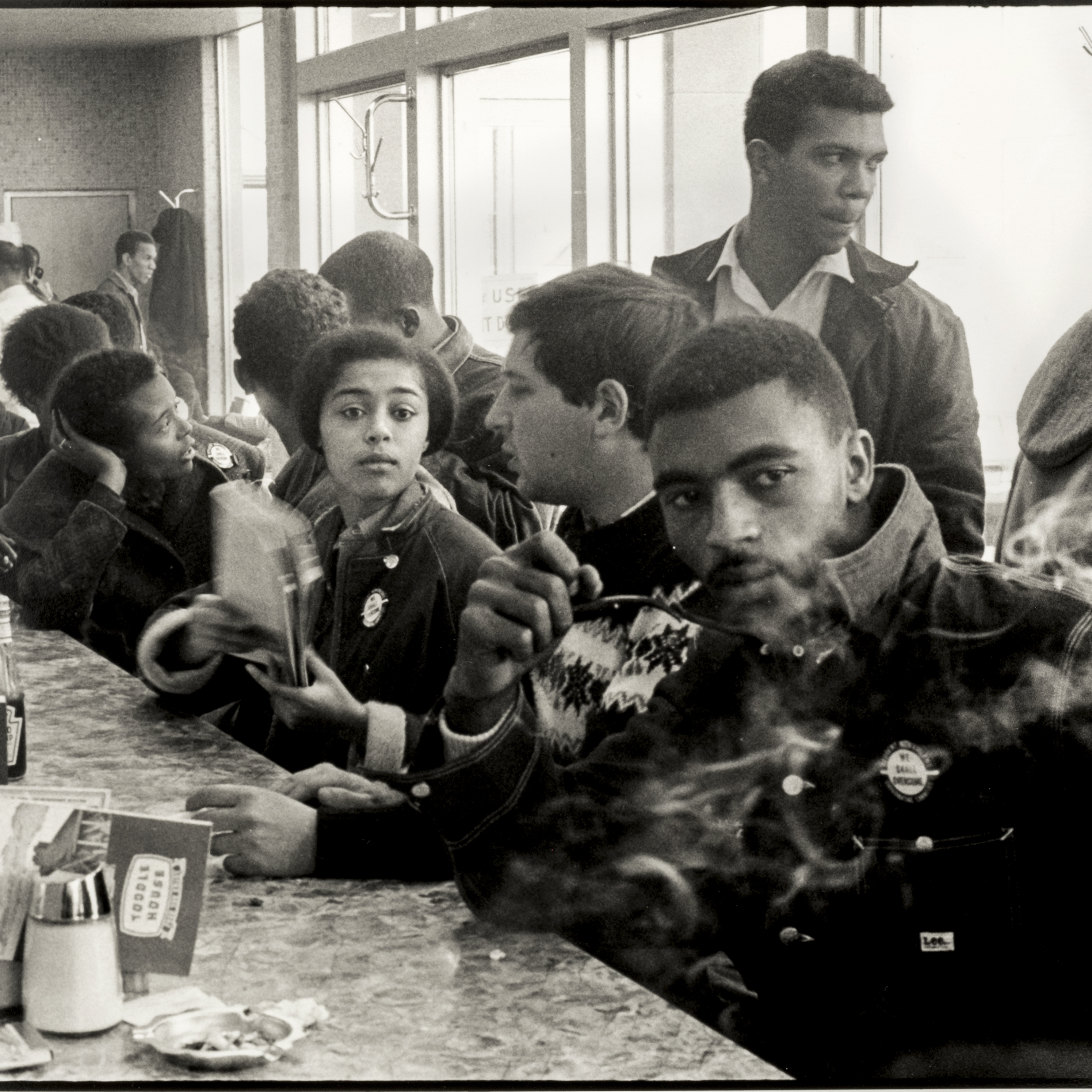
Danny Lyon (b. 1942), Toddle House Sit-In in Atlanta, 1963, Gelatin silver print. Promised Gift of James P. Agah and Wendy S. Agah (P’26, P’28) to the Wake Forest University Print Collection
September 17, 2026 — January 3, 2027
Danny Lyon (born 1942) joined the movement for civil rights in the early 1960s as the official photographer of the Student Nonviolent Coordinating Committee (SNCC). The young staff at SNCC organized peaceful direct-action protests, leading lunch counter sit-ins, freedom rides, and voter registration drives, for which they were frequently jailed, beaten, and some were murdered. He represented a new breed of documentary photographer, for whom the camera was more than an objective recorder; he was a witness to and implicated in the action, and potentially endangered. In his commitment to the cause, Danny Lyon realized that “my camera could be a sword for justice.”
In 1962, Lyon—then a University of Chicago student with a borrowed camera and a historian’s instincts—hitchhiked south and embedded himself in the thick of nonviolent planning and protest. Within a week of crossing the Mason-Dixon line, he was jailed in Albany, Georgia in a cell across from Martin Luther King, Jr. His personal commitment, rather than press credentials or newspaper assignment, gave him unfettered access to the movement. He marched when the students marched, he slept where they slept, and his images were reproduced on SNCC posters and pamphlets and in newspapers throughout the country, revealing the depth of injustice and helping to shift public perception.
Flash Point will debut more than fifty gifts promised to Wake Forest University by James and Wendy Agah, parents of a current student and a recent alumnus. The collection represents the largest single gift of photographs in the university’s history and allows a comprehensive understanding of the civil rights movement in the early 1960s. Lyon photographed the violence, but he was also able to elevate the organizers, planners, orators, scribes, and publicists of a complex national network of youthful patriots engaged in direct, non-violent action. For their own sake—and the nation’s—they courageously pursued a course charted by Dr. King: “The way of nonviolence leads to redemption and the creation of the beloved community.”
Accommodates: 8-30 people; can accomodate more if we include the historic house and a longer visit time
Recommended Grades: 4th, 5th, 8th, HS US history and Civics
60 minutes
$5 + tax per student
Questions? Contact Julia Tanner, julia@reynolda.org
Still I Rise: The Black Experience at Reynolda
Suggested grades: 3rd, 4th, 5th, 8th, HS American History and African American History
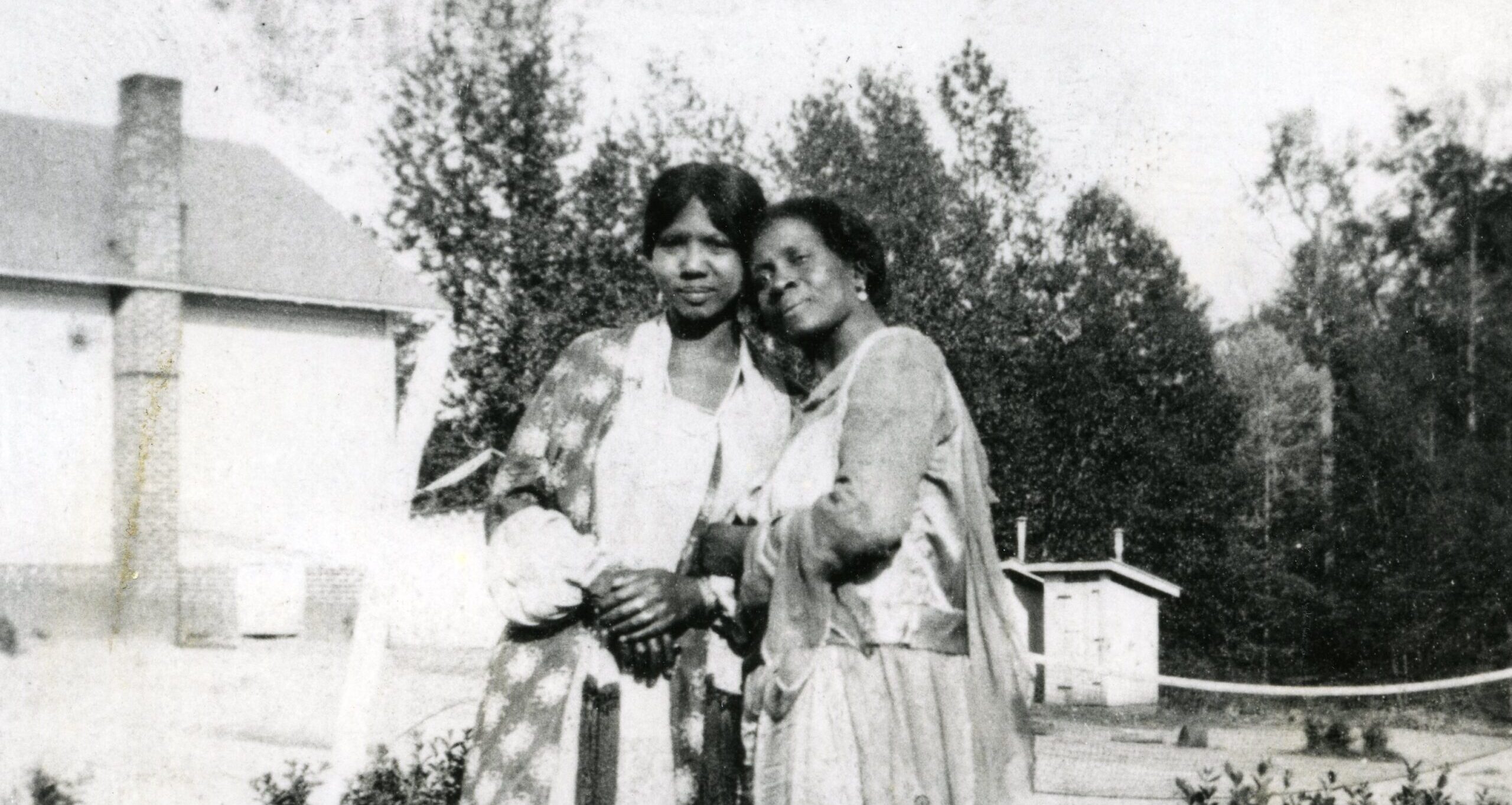
Still I Rise: The Black Experience at Reynolda examines the lives of the Black women and men who shaped Reynolda as it evolved from a Jim Crow Era working estate into a museum of art. Tours can include a focus on this exhibition and relevant places and works of art in the permanent collection.
Lesson Plans connected to Still I Rise: the Black Experience at Reynolda
Lesson Plan: The Art of Telling a Story (Grade 3)
This 30-minute social studies block lesson asks the question, “How can art tell a story?” and includes primary sources from Reynolda’s art collection and the history of African Americans who lived at Reynolda in the village of Five Row. Performance tasks include completing a graphic organizer, creating a drawing that tells a story, and writing about their creation.
Lesson Plan: Using Photographs to Observe, Wonder, and Infer (Grade 4)
This social studies lesson can be done in two 30-minute sessions or a 60-minute block, combined with ELA. It considers the life experiences of African Americans who lived at Reynolda in the early 20th century through primary sources while students practice observation and analytical skills. Performance tasks include completing a graphic organizer and making conclusions based on observations.
Lesson Plan: African American Studies (History, High School)
This 90-minute high school history lesson explores how individuals may choose to improve their lives despite restrictions or limitations of the time period in which they live. The multi-faceted lesson includes opportunity to work with primary source documents from African Americans who lived at Reynolda during two different time periods and individuals who worked for and were enslaved by RJ Reynolds’s father in Virginia.